

Blog
Seed Cycling Kit Price in Pakistan: 2026 Rate Guide

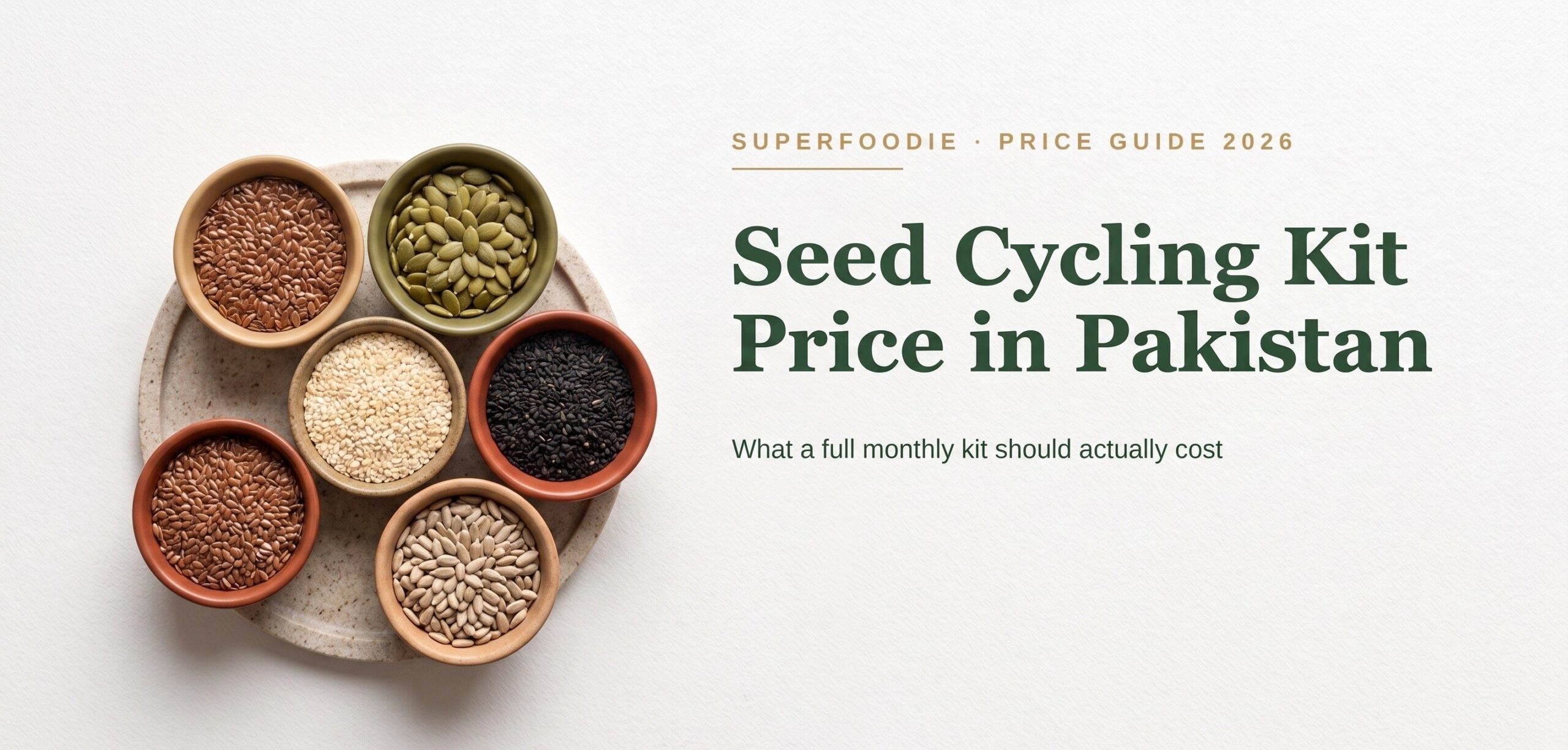
A pre-portioned PCOS seed cycling kit in Pakistan typically costs Rs. 1,200–2,000 for smaller kits (100–150g of each seed) and Rs. 2,000–3,500 for full 250g-per-seed kits — sometimes more if bundled with extras like herbal tea. Here’s whether that’s actually worth it over buying the four seeds separately, and what to check before you buy either way.
Kit Price vs. Buying Seeds Separately
A full seed cycling routine uses four seeds — pumpkin, flax, sunflower, sesame — at roughly 1–2 tablespoons of each pair (about 200–250g per seed) to cover one full monthly cycle. Here’s the DIY cost using our individual price guides:
| Seed (250g each) | Typical Price |
|---|---|
| Pumpkin Seeds | Rs. 550 – 900 |
| Flax Seeds (Alsi) | Rs. 300 – 800 |
| Sunflower Seeds (kernels) | Rs. 350 – 700 |
| Sesame Seeds (Til) | Rs. 250 – 550 |
| DIY Total (one month) | Rs. 1,450 – 2,950 |
That range overlaps almost exactly with what pre-portioned kits cost. In other words: for a properly sourced, fresh set of all four seeds, a kit isn’t charging a large convenience markup — it’s charging for the same total seed cost plus the sorting and portioning work of splitting each seed into the correct phase pack for you.
What You’re Actually Paying the Extra For, With a Kit
- Pre-portioning into phase packs. Pumpkin+flax already combined for the follicular phase, sunflower+sesame combined for the luteal phase — no measuring or remembering which seed goes with which half of your cycle.
- One freshness date instead of four. Buying separately means tracking four different purchase dates and shelf lives; a kit is packed and dated as one batch.
- One order instead of four. Simple, but real — four separate listings, four separate COD deliveries, versus one.
If you’re comfortable managing four separate bags and remembering the schedule from our Seed Cycling Chart, buying seeds individually saves a small amount and lets you buy larger quantities at once. If you’d rather not think about it monthly, the convenience premium on a well-priced kit is modest, not exploitative.
What to Check Before Buying Any Seed Cycling Kit
- Total weight per seed, not just “1kg total.” A kit listed as “1kg” split four ways is only 250g of each seed — check the per-seed breakdown, not just the headline weight.
- Raw, not roasted. Roasted seeds work against the reason you’re buying them — some nutrient content is reduced by high-heat processing, and roasted kits are generally a sign of a repurposed snack-seed supplier rather than a wellness-focused one.
- Be skeptical of kits claiming to “treat” or “cure” PCOS, or promising fertility outcomes. Seed cycling is a supportive dietary practice — see our Seed Cycling for PCOS guide for what the actual evidence supports. A kit that oversells what a food product can do is a marketing red flag, not a quality signal.
- Packaging and freshness date. The same rules from our individual seed guides apply here — a sealed, dated, resealable pack beats a stapled poly bag every time.
Where Superfoodie Fits
Our PCOS Seed Cycling Kit is pre-portioned exactly to the Seed Cycling Chart — a follicular pack (pumpkin + flax) and a luteal pack (sunflower + sesame) — raw, sortex-cleaned, and packed fresh as one batch. Current pricing is on the product page, with COD and WhatsApp ordering nationwide. We frame it as what it is: a convenient way to eat these seeds consistently, not a treatment for PCOS.
FAQs: Seed Cycling Kit Price in Pakistan
How much does a seed cycling kit cost in Pakistan?
Smaller kits (100–150g per seed) typically run Rs. 1,200–2,000. Full kits (250g per seed, covering a full month) typically run Rs. 2,000–3,500.
Is it cheaper to buy the four seeds separately?
It can be slightly cheaper, but the total cost of buying pumpkin, flax, sunflower, and sesame separately (roughly Rs. 1,450–2,950 for a month’s supply) overlaps closely with kit pricing — a kit mainly charges for portioning and convenience, not a large markup on the seeds themselves.
How much seed do I need for one month of seed cycling?
Roughly 200–250g of each of the four seeds covers one full 28-day cycle at 1–2 tablespoons per seed, per day, during its assigned phase.
Should I be cautious of any seed cycling kit claims?
Yes — be wary of kits marketed as a “treatment” or “cure” for PCOS, or that promise fertility outcomes. Seed cycling is a supportive dietary practice with a plausible nutritional basis, not a proven medical treatment.