

Blog
Seeds vs. Whey Protein: Which Is Cheaper Per Gram? (2026)

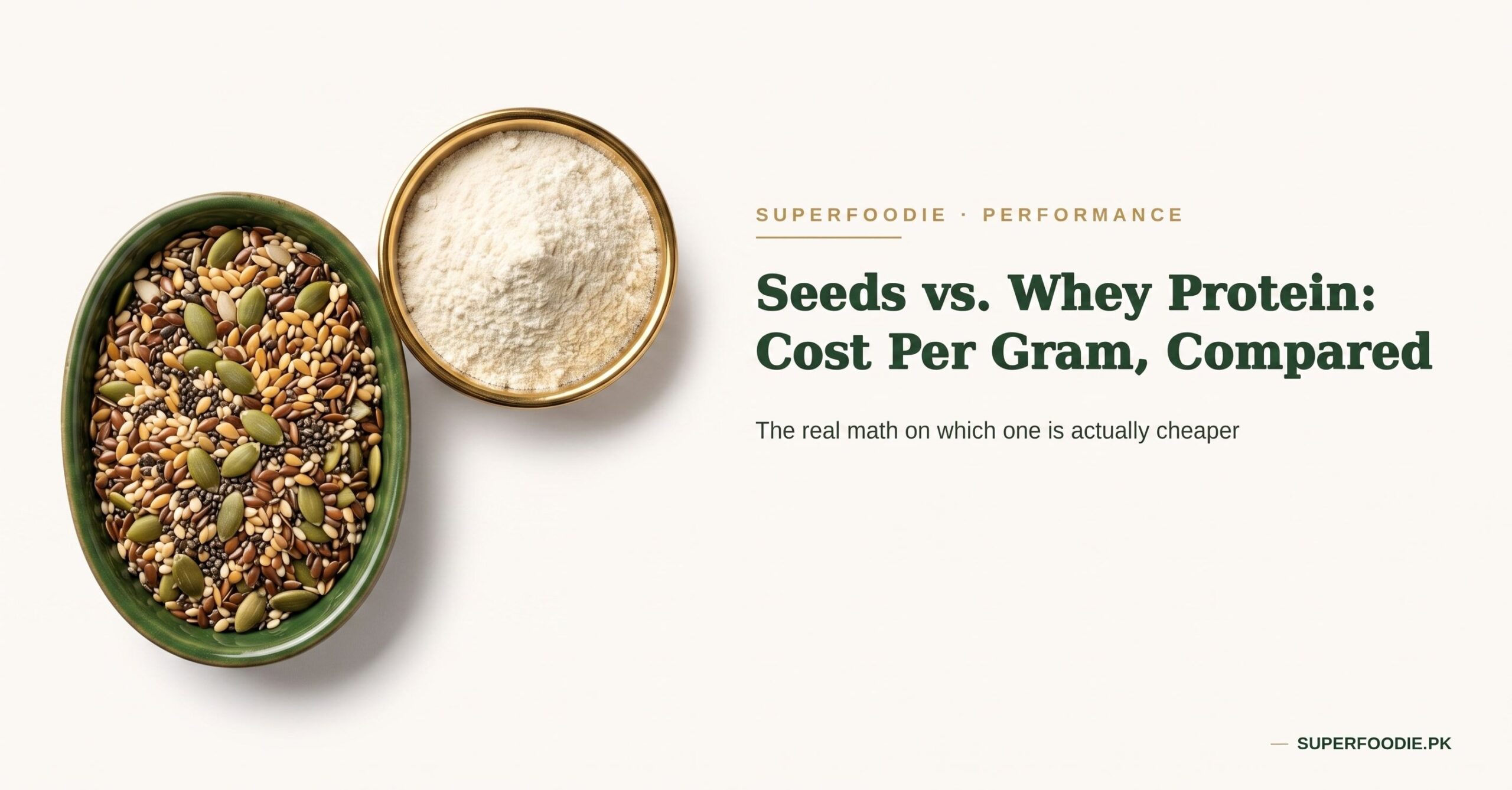
The comparison almost nobody runs correctly: not price per kilogram, but price per gram of actual protein delivered — because a kilogram of whey isn’t a kilogram of protein, and neither is a kilogram of seeds. Do the math properly and the result surprises most people. Three rounds, then a verdict.
Round 1: Price Per Gram of Protein
| Source | Typical Price | Protein Content | Cost per Gram of Protein |
|---|---|---|---|
| Pumpkin seeds | ~Rs. 2,450/kg | ~30g per 100g | ~Rs. 8.2 |
| Sesame seeds | ~Rs. 1,450/kg | ~18g per 100g | ~Rs. 8.1 |
| Flax seeds | ~Rs. 1,700/kg | ~18g per 100g | ~Rs. 9.4 |
| Sunflower kernels | ~Rs. 2,250/kg | ~21g per 100g | ~Rs. 10.7 |
| Budget local whey | ~Rs. 10,000/kg | ~75% concentrate | ~Rs. 13.3 |
| Mid-tier whey | ~Rs. 17,000/kg | ~80% concentrate | ~Rs. 21.3 |
| Premium imported isolate | ~Rs. 30,000/kg | ~88% isolate | ~Rs. 34.0 |
Winner: Seeds. Gram for gram of actual protein, seeds beat even budget whey by a wide margin, and beat premium isolate by roughly 4x. This runs against the common assumption that whey is “the efficient way to get protein” — it’s efficient in volume, not in cost.
Round 2: How Much You’d Actually Have to Eat
Price-per-gram doesn’t tell the whole story once you look at volume. Say your target is 30g of protein in one sitting:
| Source | Amount Needed for 30g Protein | Approx. Calories |
|---|---|---|
| Whey (1 scoop, ~37g) | 1 scoop | ~140 kcal |
| Pumpkin seeds | ~100g | ~560 kcal |
| Mixed seeds (average) | ~135g | ~700+ kcal |
Winner: Whey. Getting 30g of protein from seeds means eating 4–5x the calories you’d get from a single scoop, almost entirely from fat. That’s fine as a snack-sized top-up (see our protein needs guide), but it’s not realistic as your main way to hit a high daily protein target without significantly overshooting your calorie needs.
Round 3: What Else You’re Getting
- Whey: A more complete amino acid profile for muscle protein synthesis, fast absorption, minimal fiber or micronutrients beyond the protein itself.
- Seeds: A slightly less complete amino acid profile per gram, but bundled with fiber, zinc, magnesium, selenium, healthy fats, and (for flax/sesame) lignans — nutrients whey doesn’t provide at all.
Winner: Draw, context-dependent. If protein synthesis is the only variable you care about, whey’s profile is technically superior gram-for-gram. If you’re eating for overall nutrition and protein is one of several goals, seeds bring more to the table per rupee spent.
Final Verdict
Under ~100g/day of total protein need: seeds (plus regular meals) can realistically cover it, and they’re cheaper per gram doing it.
Above ~120–130g/day: whey’s calorie-to-protein density stops being optional and starts being practical — you simply can’t eat enough seeds to hit that target without also taking in far more fat and calories than most training goals call for.For most casual and intermediate gym-goers (see the worked examples in our protein needs guide), that means: seeds and whole food get you most of the way, and whey — if you use it at all — fills the last, hardest-to-reach portion of a high target, not the whole thing.
Where Superfoodie Fits
Our seeds are priced and positioned exactly for the “seeds as an everyday top-up” role this comparison points to — see individual pricing for pumpkin, sunflower, and sesame, or the 5 Super Seeds Bundle for all of them in one order. We’re not positioning seeds as a whey replacement for high-target lifters — the math above shows exactly where that would and wouldn’t make sense.
FAQs: Seeds vs. Whey Protein
Is it cheaper to get protein from seeds or whey protein?
Per gram of actual protein, seeds are typically cheaper than even budget whey — but whey delivers far more protein per gram of food eaten, which matters once your daily target gets high.
Can seeds fully replace whey protein?
For daily protein needs under roughly 100g, yes, combined with normal meals. Above that, eating enough seeds to hit the target means taking in a lot of extra fat and calories, which is where whey’s convenience becomes practical rather than optional.
Why is whey protein so much more expensive per gram than seeds?
Whey is a processed, concentrated animal-protein product with import costs (for foreign brands), manufacturing, and packaging built in — seeds are a whole, minimally processed food, which keeps the cost per gram of protein lower even though the protein itself is slightly less concentrated per gram of food.
Do whey protein prices change often in Pakistan?
Yes — more than seed prices. Whey pricing moves with USD/PKR exchange rates and import duties, so treat the whey figures in this comparison as a snapshot, not a fixed number.