

Blog
Pumpkin Seeds: Benefits, Nutrition, Uses & How to Eat Them

Pumpkin seeds are small, crunchy and surprisingly nutrient-dense. In Pakistan, they are commonly known as kaddu ke beej (کدو کے بیج) and are also sold as pumpkin kernels or pepitas when the outer shell has been removed.
They are becoming increasingly popular in Pakistan because they are easy to add to everyday foods such as yogurt, oats, salads and smoothies—and because they provide plant protein, unsaturated fats, fiber and important minerals including magnesium, zinc, iron and phosphorus. A 2026 scientific review describes pumpkin seeds as a rich source of protein, healthy lipids, dietary fiber and essential micronutrients.
But how healthy are they really? How many should you eat? Are raw or roasted pumpkin seeds better? Can they help with weight management, hair health or men’s health?
This guide explains pumpkin seeds benefits, nutrition, uses, serving size, possible side effects and the best ways to eat them.
Are Pumpkin Seeds Healthy?
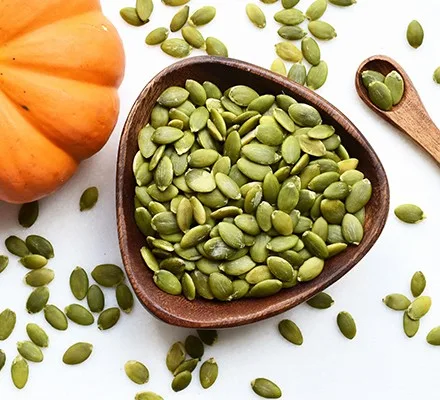
Yes. Pumpkin seeds can be a nutritious part of a balanced diet. For example, the U.S. National Institutes of Health lists 156 mg of magnesium and 2.2 mg of zinc in 1 ounce (28g) of roasted pumpkin seeds.
The important point is that pumpkin seeds are a food, not a medicine. Their nutritional value can support a healthy eating pattern, but eating pumpkin seeds should not be presented as a cure for a disease or a replacement for medical treatment.
They provide:
- Plant protein
- Unsaturated fats
- Dietary fiber
- Magnesium
- Zinc
- Iron
- Phosphorus
- Potassium
- Copper and manganese
What Are Pumpkin Seeds Called in Pakistan?
The most common Urdu name is:
کدو کے بیج — Kaddu ke Beej
You may also see:
Pumpkin kernels
Pepitas
Kaddu ka magaz
The word “pepitas” generally refers to the edible seed kernel without the hard outer shell.
In Pakistan, you can find pumpkin seeds through dry-fruit shops, pansari stores, supermarkets and online food stores. The green shelled kernels are especially convenient because they can be eaten directly without removing the outer shell.
Pumpkin Seeds Nutrition
Pumpkin seeds are relatively calorie-dense, which means a small portion can provide a substantial amount of nutrients.
USDA-derived nutrition data for dried pumpkin and squash seed kernels lists approximately 559 calories, 30.2g protein, 49.1g fat, 10.7g carbohydrate and 6g fiber per 100g. Mineral content includes about 592mg magnesium, 8.8mg iron and 7.8mg zinc per 100g. Exact values vary according to the pumpkin variety and whether the seeds are raw, dried or roasted.
Approximate nutrition per 30g
A 30g portion is roughly one small handful and would provide approximately:
| Nutrient | Approx. amount |
|---|---|
| Calories | 168 kcal |
| Protein | 9 g |
| Fat | 14.7 g |
| Carbohydrates | 3.2 g |
| Fiber | 1.8 g |
| Magnesium | 178 mg |
| Iron | 2.6 mg |
| Zinc | 2.3 mg |
These are approximate values calculated from the USDA-derived 100g profile above; actual nutrition varies by product and preparation.
That combination is one reason pumpkin seeds work well as a small, nutrient-dense snack.
Winter Sale
Up to 50% off
Shop your favorite healthy seeds now.
7 Important Benefits of Pumpkin Seeds
1. Pumpkin Seeds Are Rich in Magnesium
One of pumpkin seeds’ biggest nutritional advantages is their magnesium content.
The NIH lists 156mg of magnesium in 1 ounce (28g) of roasted pumpkin seeds, around 37% of the Daily Value.
Magnesium is involved in more than 300 enzyme systems in the body and contributes to:
- Normal muscle and nerve function
- Energy production
- Protein synthesis
- Blood glucose regulation
- Normal heart rhythm
- Bone structure and function
This does not mean pumpkin seeds are a treatment for magnesium deficiency, but they are a particularly useful food source of this mineral.
2. They Provide Plant Protein
Pumpkin seeds are one of the easier ways to add plant-based protein to meals and snacks.
USDA-derived data lists roughly 30g of protein per 100g of dried pumpkin seed kernels.
A 30g serving therefore provides around 9g of protein.
This can be useful for people who want to increase protein intake without relying entirely on meat or dairy.
Try adding pumpkin seeds to:
Dahi + fruit + pumpkin seeds
or
Oats + milk + pumpkin seeds
for a simple breakfast or snack.
3. Pumpkin Seeds Are a Good Source of Zinc
Zinc is an essential mineral involved in normal immune function, protein synthesis, DNA synthesis, cell division and wound healing.
The NIH lists roasted pumpkin seeds among good dietary sources of zinc, with 2.2mg in a 1-ounce serving.
This is one reason pumpkin seeds are often discussed in relation to:
- Immune nutrition
- Skin health
- Hair nutrition
- General dietary mineral intake
However, more zinc is not automatically better. Excessive zinc supplementation can cause side effects and interfere with copper absorption. Food sources are generally a safer way to increase zinc intake than taking high-dose supplements without a known need.
4. They Contain Unsaturated Fats
Pumpkin seeds are relatively high in fat, but much of that fat is unsaturated.
The American Heart Association recommends choosing foods containing unsaturated fats, including nuts and seeds, in place of foods higher in saturated and trans fats.
That makes pumpkin seeds useful in a balanced eating pattern.
However, remember that healthy fats are still calorie-dense. A large bowl of pumpkin seeds can add substantially more calories than a small handful.
5. Pumpkin Seeds Provide Fiber
Pumpkin seeds contain dietary fiber, although their fiber content is lower than some other seeds.
Fiber is part of a healthy diet and contributes to normal digestive function. Pumpkin seeds can therefore be a useful addition to meals, especially when combined with other high-fiber foods such as fruits, vegetables, oats, legumes and whole grains.
But don’t assume that eating a large quantity of pumpkin seeds will automatically fix constipation or digestive problems. Overall dietary fiber, hydration and eating patterns matter.
6. They Provide Iron and Other Minerals
Pumpkin seeds contain iron as well as magnesium, zinc, phosphorus, potassium, copper and manganese.
Iron is important for oxygen transport and many metabolic processes.
This is particularly relevant because inadequate iron intake or deficiency can be associated with health problems, including hair shedding in some people. However, pumpkin seeds are not a substitute for diagnosis or treatment of iron deficiency.
If persistent fatigue, weakness or unexplained hair loss is a concern, it is better to investigate the underlying cause rather than assuming that adding one food will solve it.
7. Pumpkin Seeds Are an Easy Alternative to Less Nutritious Snacks
One of the most useful benefits of pumpkin seeds is practical rather than medical.
They require almost no preparation.
Instead of reaching for biscuits, chips or heavily processed snacks, you can use a small serving of pumpkin seeds with fruit, yogurt or another balanced snack.
The American Heart Association includes pumpkin seeds among nuts and seeds that can provide healthy fats, protein and fiber as part of a healthy eating pattern.
This makes them particularly convenient for:
- Office snacks
- School or university snacks
- Pre- or post-workout meals
- Breakfast toppings
- Travel
- Homemade trail mixes
Pumpkin Seeds and Weight Loss: Do They Help?
Pumpkin seeds are often promoted online as a “weight-loss food.”
A more accurate description is:
Pumpkin seeds can fit into a weight-management diet, but they do not directly cause fat loss.
Their protein, fat and fiber can make a snack more substantial than some highly processed alternatives, but pumpkin seeds are also calorie-dense.
That means portion size matters.
A small handful can fit comfortably into a calorie-controlled diet. Eating several large handfuls every day can add hundreds of calories.
So don’t think:
“Pumpkin seeds burn fat.”
Think:
“Pumpkin seeds can be a nutritious component of a balanced diet when portions are appropriate.”
The scientific literature on dietary fiber and satiety is also mixed rather than supporting the idea that any high-fiber food automatically suppresses appetite.
Read more: Best Seeds for Weight Loss →
Pumpkin Seeds for Hair Growth and Hair Fall
Pumpkin seeds are commonly recommended for hair because they contain nutrients such as zinc, iron and protein.
Those nutrients are relevant to normal nutrition, and nutritional deficiencies can contribute to hair problems in some people.
But there is an important distinction:
Whole pumpkin seeds have not been proven to cure hair loss or directly regrow hair.
Research involving pumpkin seed oil is more specific. A randomized controlled trial in men with androgenetic alopecia investigated 400mg/day of pumpkin seed oil for 24 weeks and reported greater hair-count improvement than placebo.
That study involved pumpkin seed oil, not simply eating whole pumpkin seeds.
So it would be misleading to tell someone that eating pumpkin seeds will necessarily reproduce those results.
For the full evidence-based discussion, see:
Pumpkin Seeds for Hair Growth & Hair Fall — Does It Actually Work?
Pumpkin Seeds for Men’s Health
Pumpkin seeds are sometimes associated with prostate health because pumpkin seed products have been studied in men with lower urinary tract symptoms associated with benign prostatic enlargement.
For example, the one-year GRANU randomized study enrolled 1,431 men and found a descriptive improvement in symptoms in the whole-pumpkin-seed group compared with placebo, while the pumpkin-seed extract group did not differ from placebo on the primary response criterion. The researchers concluded that further evidence was needed before recommending pumpkin seeds as a treatment for moderate symptoms.
So the sensible takeaway is:
Pumpkin seeds can be part of a nutritious diet for men, but they should not be marketed as a treatment for prostate disease or urinary symptoms.
Persistent urinary symptoms should be assessed by a healthcare professional.
How Many Pumpkin Seeds Should You Eat Per Day?
There is no universally established “correct” number of pumpkin seeds for everyone.
A practical serving is around:
20–30g per day
This is roughly a small handful, depending on the size of the seeds.
The American Heart Association uses about 1 ounce (28g) as a general serving size for nuts and seeds.
You can eat your serving all at once or divide it between meals.
For example:
Morning: 1 tablespoon with yogurt or oats
Afternoon: 1 tablespoon as a snack
There is no scientific reason that you must eat pumpkin seeds at a particular time of day.
How to Eat Pumpkin Seeds
You don’t need an elaborate recipe.
1. Eat Them as a Snack
Simply eat a small handful of raw or roasted pumpkin seeds.
Choose unsalted varieties if you want to keep sodium lower.
2. Add Them to Yogurt
Combine pumpkin seeds with plain yogurt, fruit and a little cinnamon.
3. Sprinkle Them on Oats
Add them to oatmeal or overnight oats for extra crunch and nutrients.
4. Add Them to Salads
Pumpkin seeds work particularly well with green salads, chickpeas, cucumber and leafy vegetables.
5. Put Them in Smoothies
Blend a small portion into a smoothie with milk or yogurt and fruit.
6. Add Them to Homemade Granola
Pumpkin seeds can be baked into homemade granola or used as a topping.
7. Use Them in Pakistani Meals
You can also experiment by adding them to:
- Dahi
- Fruit chaat
- Oats
- Homemade granola
- Salads
- Smoothie bowls
- Homemade energy bites
The easiest routine is usually the one you can actually maintain.
Raw vs Roasted Pumpkin Seeds: Which Is Better?
Both can be useful.
Raw pumpkin seeds
Advantages:
- No roasting required
- Mild flavor
- Easy to add to meals
- Convenient for grinding or blending
Roasted pumpkin seeds
Advantages:
- Stronger nutty flavor
- Crunchier texture
- Convenient as a snack
The nutritional values can differ somewhat depending on the processing method, so don’t assume raw and roasted seeds are nutritionally identical.
For everyday use, the bigger practical issue is often what is added to the seeds.
Look for:
No unnecessary additives
Reasonable sodium
Freshness
Good packaging
Should You Soak Pumpkin Seeds Before Eating?
You do not need to soak pumpkin seeds before eating them.
Some people soak seeds because they want to reduce compounds such as phytate.
Phytate can bind minerals such as zinc, iron, magnesium and calcium and reduce their absorption under some dietary conditions. At the same time, phytate is also a naturally occurring bioactive compound with potential beneficial effects.
For most people eating normal food portions, there is no need to become overly concerned about phytate.
A varied diet is more important than trying to eliminate every naturally occurring compound from plant foods.
Pumpkin Seeds: Possible Side Effects
Pumpkin seeds are generally well tolerated as a food, but eating large amounts may cause digestive discomfort.
1. Bloating or Stomach Discomfort
Because pumpkin seeds contain fat and fiber, suddenly eating a large quantity may cause bloating or discomfort.
Start with a modest portion if you’re not used to them.
2. Calories Can Add Up
Pumpkin seeds are nutrient-dense but also energy-dense.
A healthy food can still contribute too many calories when eaten in excessive amounts.
3. Allergies
Seed allergies are uncommon but possible.
Anyone who develops symptoms such as swelling, itching, hives, difficulty breathing or other signs of an allergic reaction should stop eating the food and seek appropriate medical care.
4. Salted Varieties Can Be High in Sodium
If you’re watching sodium intake, choose unsalted or lightly salted pumpkin seeds.
Who Should Be More Careful With Pumpkin Seeds?
Most healthy adults can include pumpkin seeds as part of a balanced diet.
However, anyone with a diagnosed medical condition, food allergy, specific dietary restriction or medication-related concern should consider their individual circumstances.
Don’t replace prescribed medication with pumpkin seeds, pumpkin seed oil or another food supplement.
Pumpkin Seeds vs Chia Seeds vs Flax Seeds
All three are nutritious, but their nutritional profiles are different.
| Seed | Particularly notable for |
|---|---|
| Pumpkin seeds | Protein, magnesium, zinc and unsaturated fats |
| Chia seeds | Fiber and omega-3 ALA |
| Flax seeds | ALA omega-3, fiber and lignans |
So there isn’t one seed that is “best” for everyone.
For example:
Want more magnesium and zinc? Pumpkin seeds are especially useful.
Want to increase fiber and plant omega-3 ALA? Chia can be useful.
Want ALA omega-3, fiber and lignans? Flax seeds are a strong option.
A varied diet can include more than one type of seed.
For people who enjoy all of them, rotating or combining different seeds is often a simple way to diversify their nutrient intake.
How to Add Pumpkin Seeds to Your Daily Routine
You don’t have to completely change your diet.
Try this simple routine:
Breakfast
Yogurt + fruit + 1 tablespoon pumpkin seeds
Lunch
Salad + 1 tablespoon pumpkin seeds
Evening
A small handful instead of a heavily processed snack
Or simply choose one meal and make pumpkin seeds part of it every day.
Consistency is more useful than complicated routines.
How to Store Pumpkin Seeds
Because pumpkin seeds contain a significant amount of fat, freshness matters.
Keep them:
- In a tightly sealed container or pouch
- Away from heat and direct sunlight
- In a cool, dry place
- Refrigerated when appropriate for longer storage after opening
If the seeds develop a stale, bitter or unpleasant smell or taste, they may have gone rancid and should not be eaten.
Pumpkin Seeds Price in Pakistan
The price of pumpkin seeds in Pakistan varies considerably depending on:
- Raw vs roasted
- Shelled vs unshelled
- Quality
- Origin
- Packaging
- Pack size
- Brand
At Superfoodie, our current pumpkin-seed product is available in 500g and 1kg sizes, with the current listed price shown on the product page.
What should you check before buying?
Don’t compare products on price alone.
Look for:
Clean seeds
Fresh packaging
No unnecessary additives
Consistent seed size and appearance
Clear weight information
A lower price is not particularly useful if the product is stale, poorly stored or contains excessive salt.
How to Choose Good Pumpkin Seeds in Pakistan
When buying kaddu ke beej, check the packaging and appearance.
Good pumpkin seeds should generally look:
- Clean
- Dry
- Fresh
- Uniform
- Free from visible moisture or mold
- Free from unusual odors
For everyday use, raw, shelled and unsalted pumpkin seeds are particularly versatile because you can snack on them or add them to meals without further preparation.
Frequently Asked Questions
What are pumpkin seeds called in Urdu?
Pumpkin seeds are commonly called کدو کے بیج (Kaddu ke Beej).
What are pumpkin seed kernels?
Pumpkin seed kernels are the edible inner part of the seed after the hard outer shell has been removed. They are commonly called pepitas.
How many pumpkin seeds should I eat daily?
A practical serving is around 20–30g, or roughly a small handful. Individual dietary needs vary.
Are pumpkin seeds good for hair?
Pumpkin seeds provide nutrients such as zinc, iron and protein that are relevant to overall nutrition. However, eating whole pumpkin seeds has not been established as a treatment for hair loss.
Are pumpkin seeds good for weight loss?
They can fit into a weight-management diet, especially as a replacement for less nutritious snacks, but they are calorie-dense and do not directly “burn fat.”
Can I eat pumpkin seeds every day?
For most healthy people, pumpkin seeds can be included regularly as part of a balanced diet. Portion size matters because they are calorie-dense.
Are raw pumpkin seeds better than roasted?
Neither is automatically better for everyone. Raw and roasted seeds have different textures and can differ nutritionally depending on processing. Choose the version you enjoy and will eat consistently.
Should I soak pumpkin seeds before eating?
No. Soaking is not required for normal consumption. Some people choose to soak seeds to alter phytate levels, but it is not necessary for everyone.
Do pumpkin seeds contain zinc?
Yes. The NIH lists about 2.2mg of zinc in 1 ounce of roasted pumpkin seeds.
Do pumpkin seeds contain magnesium?
Yes. One ounce of roasted pumpkin seeds provides about 156mg of magnesium according to NIH data.
Can pumpkin seeds cure disease?
No. Pumpkin seeds are a nutrient-dense food, not a cure or substitute for medical treatment.
The Bottom Line
Pumpkin seeds are worth adding to a healthy diet—not because they are a miracle food, but because they provide a useful combination of plant protein, unsaturated fats, fiber and minerals such as magnesium and zinc.
In Pakistan, kaddu ke beej are an easy everyday food that can be added to yogurt, oats, salads, smoothies or eaten as a simple snack.
A small serving of around 20–30g per day is a practical starting point for many people. Keep portions sensible, choose fresh seeds, and focus on your overall diet rather than expecting one food to solve a specific health problem.
And when you see online claims that pumpkin seeds can “cure” hair loss, prostate problems, diabetes or other conditions, look at the actual evidence. Some pumpkin-seed compounds and products have interesting research behind them, but promising research is not the same as a proven treatment.
Explore Superfoodie’s Pumpkin Seeds
Superfoodie’s Pumpkin Seeds (Pepitas) are sold as raw, natural pumpkin seeds in 500g and 1kg sizes for everyday use.
Shop Pumpkin Seeds at Superfoodie
Related Superfoodie Guides
Pumpkin Seeds for Hair Growth & Hair Fall — Does It Actually Work?
How Many Pumpkin Seeds Should You Eat Per Day?
Raw vs Roasted Pumpkin Seeds: Which Is Better?
Seeds for Hair Growth & Hair Fall: Pumpkin vs Flax vs Chia vs Sunflower
Pumpkin Seeds for Weight Loss: What the Evidence Says
Kaddu Ke Beej (کدو کے بیج): Benefits, Nutrition & How to Eat Them